Monday, 2 March 2009

A story I'm not allowed to tell

Day Three. Ron Jonson tells a story that I'm not allowed to write. He's promised his son it won't ever be published. It's a funny, funny story.


Here's my own little kitchen sink drama for you instead then. I'm sitting in the front row of a small auditorium with my pen and my notepad. I'm not a real journalist, and as a volunteer I'm not even a proper employee of Mr B's and, by extension, the LitFest. But the nice Steward (well, they're all nice, aren't they) has sent me to the front where there are seats with 'RESERVED FOR FESTIVAL STAFF' signs. She has done this because when she asks for my ticket at the door I peel back my jacket to reveal my Mr B's badge and coolly say, 'I'm writing a blog for Mr B's.' But I don't say it very coolly. My voice breaks a little. Like a chair being pulled out. And I stutter. She gives me a 'poor love' look and directs me to the front row out of sympathy.


A few seats along, in the front row but not in Festival Staff seats, there are a couple of ladies arguing. This is good, I think. I can write about this. If I write about this in my notebook, I think, people around me will think I'm a writer and won't question why I'm sitting in such a good seat. The women are bickering. I write, 'mad women bickering in the front row' in my notebook and I give a little laugh. Ha ha. I am funny. I am a funny, funny writer. Why don't I send some of this stuff to a newspaper? This is good stuff.


One of the women moves seats and sits behind me. I feel sure she can read what I'm writing. It's good stuff, why wouldn't she want to read it? I look down at the notepad. Mad women bickering, it says. I put my notepad away.


After introducing the speaker, the Festival Producer sits down next to me in one of the seats for Festival Staff. I stick out my chest a little to show my badge off. It's suddenly awfully small. Has she seen it? She hasn't seen my teeny tiny badge.


At the risk of a face-off with the bickering woman, I pull out my notepad and, quickly flicking to a page sans mad women bickering, or shopping lists, pretend to write about what the speaker is saying. The audience chuckles. The Festival Producer chuckles. I chuckle knowingly and smile at her. And go back to the notepad with a face that says, 'this is good stuff, this is a funny, funny speaker.'


But I haven't been listening. So I draw a bad picture of the speaker. Here the speaker tells a story that he's promised his son he won't publish. It's just too good. But, because I can't write the story, I carry on drawing my silly picture of the speaker.


Afterwards, I ask one of the pretty members of Mr B's happy helpers (i.e. not me) to ask the speaker for a sound-byte for the blog. She doesn't have any paper so takes my notepad and pen.


Opposite me, there's a group of Festival Staff. The Nice Steward, the Festival Producer and some other women that I don't know. I get the feeling they're talking about me. One of them comes over. I sit down and try to look really cool, thrusting out my chest. She asks if I'm a journalist. 'I'm writing a blog for Mr B's,' I say, patting my pockets. But my notepad isn't there. I shift in my seat and its feet creak against the floor. For a moment I wonder if I'm going to be thrown out for pretending to be a real writer. But she's very polite. We chat and she doesn't give me a 'poor love' look. We shake hands and she leaves. Well, I'm with Mr B's now, after all. What was I expecting? Derision? I've arrived.


The girl from Mr B's comes back. 'Jon says he likes your picture,' she says.


Good night.


Sam 'The Uncommon' Reader

Jika Jika. That's coffee to you or me.

Thanks, Mr B.


Sam Reader here, back on the digital ivories. Just a swift tinkle before I post my concerto later tonight.

It's time for a snackerel, I reckon. If you like your coffee, it's worth checking out Jika Jika in the Festival Hub run by Bath's very own Matt Stevens. As a precursor to the grand opening of the cafe in late Spring 09 (Stevens and business partner Lee Mears are awaiting the final touches to their renovated premises on Princes Buildings), Jika Jika is offering a snappy little coffee right at the heart of Bath LitFest.


I caught up with Matt yesterday. "We're passionate about a high quality product," he told me, "and we think Bath deserves an alternative to the High Street chain cafes." Independent retail rather than the big homogenous chains? Yes, a fine idea. And the coffee's pretty darn good. Mr B's staff all highly recommend the brownies.


Has he taken any time out to enjoy the Festival? Only to see Jonathon Coe. "I loved The Rotters' Club," Stevens told me, "but he didn't talk about it!" C'est la vie, uh.

Back to it then, dear friends. Speak later.


Sam 'The Uncommon' Reader

Northern Roots in a Southern Green Room

Mr B here, invading Sam 'The Uncommon' Reader's rightful blogging place, to report on desperate scenes from the Lit Fest Green Room on Sunday evening. Leaving Team B (in the lurch) to bench-press stacks of Gerald Scarfe's absolutely colossal books into happy customer's bags, I took a rare opportunity on Sunday evening to pop down to the Green Room - that happy refuge of incoming and outgoing authors, and of festival team members in various states of collapse after the successful negotiation of 25+ events in a single weekend.


I chose that moment hoping to catch top radio DJ, walking music encyclopedia and author of brilliantly named North/South divide classic, "Pies and Prejudice", Stuart Maconie supping a brew before his event. Armed with a mental list of my not inconsiderable Northern credentials (complete with Bradford wool-milling Grandfather, Reg) I sailed into the room only to find myself in a queue of other wannabe Northerners, headed by Bath Big Read author and Mr B's Emporium favourite (and, I'm proud to say, fan) Jonathan Coe. As Maconie enjoyed a glass of Stout (I'm lying, that would be too good, it was Merlot) I jockeyed for position with the Lit-Fest's superhero organiser-in-chief Zoe Steadman-Milne who, it turns out, was also keen to talk whippets with the great (although actually quite little) man.


But no, Zoe and I were soon united in disappointment though as it became clear that it was taking Coe so long to convince Maconie that he was even a tiny bit Northern that he was going to hog him right up until he was dragged away for his Southern softie soundcheck.


Never fear. I got my Northernness pitch in later on. That's the thing about being a bookseller. Authors can't run away from you when you're having them sign a whopping big pile of books.


Posted by 'Mr B'

Sunday, 1 March 2009

Rose George puts the 'log' in 'blog' - A Sunday Summary

Okay. No more Mr 'Sports-fans'. If you'd wanted a celebration of Middlesbrough's exploits you'd be reading the Tees Mouth blog. Today is all about the books and the lovely sunny festival vibes. Also on a point of style, Mr B (here B stands for Boss) kindly advises me that yesterday's post was 'macro'. In response, here's a mere snippet of my Sunday best.


Firstly, the most sprightly of speakers I've seen so far. Dr Ben 'Bad Science' Goldacre is a fierce, frizzy mop of intelligence in a tanktop who is cool and nerdy and righteous (dude). Check out his stuff in the Grauniad, online or, even better, buy his book from Mr B's Emporium. Science or statistics classes across the country are sorely missing the enthusiasm and incision this chap has at his finger-tips. Cue a mile-long line to get autographs - or is that medical advice? - from the goodly doctor.


Shoes of the day? Jonathon Stubbs, Development Officer. Effortlessly brown leather and apparently from a charity shop. Well done.


The Poetry Taxi - winsome undergraduates lure unsuspecting bloggers into the back of a taxi whereupon they unleash a tirade of abuse. 'You're a drawing-pin stuck in my sock,' I was told, 'you're a serious mistake in a nightie.' Oh. I get it. It's a poem by James Fenton. But I saw him speak this morning. He seemed so nice. But here's a pome by Mr Rosen. Now you're talking at my level! (Precisely down behind the dustbin.)


Nod Knowles, Chief Executive, kindly gives me a moment out of his busy schedule to provide you his top tip for the week: Hugh Lupton and Chris Wood, Sunday 8th March in the Guildhall at 5.30pm.


'I know that's going to be brilliant,' Mr Knowles tells me. Unfortunately, 'I know that's sold out,' the website tells me. 'There's something here for everyone,' says Mr Knowles. Quite so. And very generous to give me his thoughts in the middle of a very busy day.


Personally, I'm looking forward to Jon Ronson, Monday at 7.30pm at the Guildhall. Also, at the other end of the week, two events starting at 7.30pm at the Guildhall - New Writing, The Anthology and Focus on Hungary: Anna Szabó and George Szirtes. What is a blogger to do?


One last thing before I sign off then - there is more but it'll have to wait as I'm already rambling on - Rose George talking to Robin McKie about her book, The Big Necessity. It's about poo. It's a serious thing though - were it not for our First World sanitation and sewage systems, we'd all be in the shit. As t'were.


From the outset, Rose George says that she doesn't like toilet humour as she's 'not a 14 year old boy.' Just to say then, as she has previously published a book, this is her number two release. Sorry.


As always, remember that Mr B's is the official bookseller for Bath Literature Festival 2009 and if you've seen anything you like, do pop in and say so. Or just come and visit us for a little bookish pampering - we're always pleased to see you.


Sam 'The Uncommon' Reader
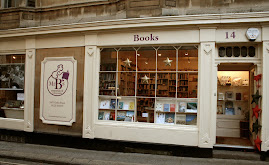
Sunday yummy Sunday

In my rush to get on with more pressing matters last night (empty a bottle of wine in front of the footer) I forgot to mention what a large amount of shoulder rubbing and chin wagging I did yesterday. My upper body aches. I did more networking in an hour than a BT engineer gets to in a year (other telecommunication suppliers are available).


Upper and foremost was bright young thing Tracey Wall, a product of the Bath Spa Creative Writing MA. Currently she's freelancing in an ever diminishing sector - in a recession it's always the arts that get it in the neck first, eh - until her magna opus is published. Keep your eyes peeled back for that one.


While you're waiting though, you could do worse than to catch a whiff of the current crop on Wednesday night at the Rondo.


Right. Coffee - Check. iPod - Check. Cardigan - Check (other woolen products are available). Who doesn't love Sundays? I'll see you out there, page-botherers.


Sam 'The Uncommon' Reader

Saturday, 28 February 2009

No more sleeps

Good evening, sports fans. And what a balmy evening it was. The skies cleared, the air thickened and you dear Bathonians swarmed like happy mozzies to the Guildhall to feast on literary veins. A-hem.


Yes, today was a treat. Despite an inevitable draw on the cards in the Windies, England have at least produced a batting performance worthy of a national team. Liverpool, bless them, all but gave up the title ghost at the Riverside. Good old pog-faced Southgate. Rugby? Okay. Today we're Scottish. Pass me the Highland Park, old boy! Don't mind if I do. And another? Ho ho.


But hang on. I've got to at least attend one event at the Lit Fest if I'm to write this blog. And so it is that, at 5.30 your time, Mr B's Blogger finds himself not in front of the goggle-box enjoying O'Driscoll's finest, but instead at the Guildhall awaiting an audience with Auschwitz survivor, Thomas Buergenthal, to celebrate the launch of his new book, A Lucky Child: A Memoir of Surviving Auschwitz. It chronicles his youth under the long, dark shadow of the Nazi regime. A sombre first night then, eh.

Well. No. The atmosphere is as warm as the room. Friendly. The familiar voice of Kirsty Lang (something about it reminds me of washing up). And here to the stage is a chipper old chap who joins our Kirsty on the comfy brown leather sofas. He could your grandpa. Genially he describes fleeing to Poland from the family home in what is now Slovakia. Random killings in the ghetto. The visas that would take them to England on the day that Hitler decided he had other ideas for the Buergenthals (on the day the family were due to ship out, the Nazis invadde Poland). And then Auschwitz. Inmate number B2930 at 10 years old. The Angel of Death. The sounds of screaming through the night. Kirsty Lang tells us that although it is primarily a very optimistic book, it frequently moved her to tears. You aint kidding, missus.


But the atmosphere, as I say, is warm. He talks of a personal battle with the Nazis, a 'wonderful game of staying alive.' Chuckles abound from the audience. 'I won and you lost,' he points at Hitler. The broken innocence of a childhood spent avoiding Dr Mengele and starvation produced this bitter sweet view of his formative years.


Recently we've had gushy Kate in the big shiny rendition of The Reader. We've had Daniel Craig as Partisan and Tom Cruise bashin' the Nuzzies. In modern popular fictions, the Jews in Nazi Germany are sweetly victims or they are action heroes in bristling technicolour. But here is a man who was a child, in his mother's words, a lucky child. (The story goes that a fortune teller told her that although bad times were ahead, Thomas would come out the other end okay.) Importantly, the Holocaust is by no means gone from living memory. Before it is resigned to history, or more worryingly, story and myth, personal accounts of this dark moment in humanity are vital to our understanding of what happened, and vital to what Buergenthal admits he pointedly turns his attention away from - Holocaust deniers. 'They're trying to kill us twice,' quoth he. Yes.


Questions from the floor then. Asked what he most enjoyed once free and reunited with his mother, Mr Buergenthal replies resoundingly 'sports!' With no religious instruction available, he was allowed to play football and go running.


Afterwards, Herr B tells me that he'd very much enjoyed Kirsty Lang's interviewing. She'd brought the best out of him, so he says. I'm only glad I wasn't interviewing him. I completely forget to ask him which team he supports.


Mr B's - the official bookseller of the Bath LIterature Festival 2009

If you've liked anything you've seen today, including A Lucky Child, remember that Mr B's can supply all your bibliotherapy needs: http://www.mrbsemporium.com/.

Good night for now - Match Of The Day calls.


Sam 'The Uncommon' Reader

Thursday, 26 February 2009

Two more sleeps until the Bath Literature Festival 2009!

Now boys and girls, I'm sure you're as excited as I am in knowing that this year's Literature Festival is nearly upon us. As of this Saturday, we'll be keeping you up to date DAILY with a super-dooper blog written lovingly by our very own friend Sam, so keep-a-readin' to make sure you're on top of it all. It's mayhem here at the Emporium; we're printing, carting, reading, writing, drawing, cutting - not to mention sweating, bleeding and crying to deliver you the best festival yet.

In the last few days before it all kicks off I thought I'd cease all the rushing, have a cup of tea and tell you what's going down over the next few days of "debate, discovery, passion and inspiration." One of Saturday's highlights sure to set your ears aflame is the Big Bath Read and who have they got talking? Only tip-top titan-of-an-author Jonathan Coe! He'll be at the Guildhall between 4 and 5 discussing his most recent novel The Rain Before it Falls (sponsored by Mr B's and our friends at the soon-to-open Jika Jika Cafe). Not only can you listen and join in the hearty debate, but the following day you can hear the music that inspired the title, Flautist Theo Travis, playing to extracts of the novel at 4:30pm.

Sunday also brings many a literary delicacy for you to enjoy. If you fancy a bit of demonic, Dali-esque satire, then come along and see political cartoonist Gerald Scarfe and admire the work from Monsters: How George Bush Saved the World and Other Tall Stories. Inspired by greed, hypocrisy, power and arrogance, Scarfe tells the tales of Bill Clinton (and how he Did Not Have Sex With That Woman) Margaret Thatcher and John Major in a mad lampoon-athon of a book.

Monday's offerings include not only Chinese Poetry and an extensive workshop on how to edit your own writing for publication (listen up all Creative Writing Students!) but also, at 7:30pm the Guildhall, award-winning journalist, documentary filmmaker and all round hilariously witty man, Jon Ronson. He'll be reading from his side-splittingly funny new book, What I do: More True Tales of Everyday Craziness. As a fan, with his old Guardian column ripped out and stashed in an old trunk, I can recommend this event wholeheartedly. Also, you might be interested to know that his previous black comedy offering, Men Who Stare at Goats - a romp of a read about conspiracy in Iraq - is being made into a Hollywood movie, starring none other than Ewan Mcgregor, Jeff Bridges and George Clooney!

Right, where are we? Tuesday. Yes. Well, Tuesday provides us with a fascinating talk by Yasmin Hai and Ziauddin Sardar, authors of Balti Britain: A Journey Through the British Asian Experience and The Making of Mr. Hai's Daughter, respectively. An absolute plethora of culture and identity, wit and religion not to be missed.

Anyway, enough yapping from me. If that all sounded pretty peachy to get you started, then keep clicking on trusty Sam's blog to stay in the know for all 9 days of Lit Fest. See you at the Festival and please do comment at will with your festival experiences and comments. We'd love to hear from you!

Tuesday, 10 February 2009

Mr & Mrs B's Battle of the Classics

Mr & Mrs B's Battle of the Translated Classics - Andric vs Alain-Fournier

Coming up with a reading strategy is always fun in the New Year but when you are a bookshop owner it presents a real challenge. Where to start with book group books, advance reading copies, brand new, fab looking titles, kids' books etc....and by the end of the year we never seem to have read enough of the classics. So this year, we have a new "classics with a twist"plan. In between the regular book group reads and contemporary titles, we (i.e. Mr & Mrs B) will each read a classic translated fiction title starting with surname "A" and working down the alphabet. And we'll let you know what we thought of them - warts and all - right HERE.

Ivo Andric vs Alain-Fournier

First up for Mr B was Ivo Andric "The Bridge over the Drina"
(Harvill, £10.99. Originally Published in 1945 in Serbo-Croat).

In 25 words: Stone bridge built by C16 Turkish Grand Vezir stands witness to 350 years of Balkan upheaval in fascinating history lesson cum epic multi-character novel.

In more than 25 words: This incredible novel is splattered with eye-opening (and often head-losing) stories illustrating the tension between Bosnians and Serbs and the Turks and then Austro-Hungarians that ruled over them during the second half of the last millenium. A biographical novel of a bridge built at the town of Visegrad by a Bosnian-born Grand Vezir in memory of his last journey from his homeland from which he was plucked by the Turks as a young boy.

Beginning with the long and bloody construction of the bridge and then moving fitfully forward through 350 years, Andric introduces us to an endless stream of sometimes loveable, sometimes roguish Visegrad residents (often cleverly linking back to their descendents who we may have encountered in previous chapters). The bridge often looms large in the stories - a Turkish bride leaps from it to avoid marriage; a comically-described gambler loses his biggest bet (and possibly his marbles) on it; the new governing forces of the Austro-Hungarian empire are met by the town's elders for the first time on it; drunks teeter across its parapet and innumerable people end up impaled, beheaded or even pinned-by-the-ear to it.

Through these vignettes of life in Visegrad and on its stone bridge across the Drina, you gradully gain an understanding of the region's tumultous history right up to the outbreak of WW1 following the Archduke's assassination in relatively nearby Sarajevo. For me the most remarkable aspect of the novel is the multitude of perspectives that Andric gives you on the momentous events taking place in the big and scary world outside Visegrad, as he shows us those events through the eyes of Turks, Serbs, Bosnians and Austrians and Jews, Orthodox Christians, Catholics and Moslems.
Andric won the Nobel Prize for this novel and it really wider recongition as a genuine C20 classic here in the UK.
- v. -

First choice for Mrs B was Henri Alain-Fournier "The Lost Estate (Le Grand Meaulnes)"
(Penguin, £8.99. Originally published in 1913 in French).

Among the reviews which paper our downstairs toilet at Mr B's is an article all about this book which few English people seem to have heard of, but which to French people is as famous as "Great Expectations" is to us British. It is billed as one of the defining coming-of-age stories of French literature and the introduction draws parallels with The Great Gatsby. Every time I visit the toilet I am reminded of it and, bring half-French, feel it my duty to give it a go. felt it remiss of me not to have read it and was excited at the prospect.

The narrator is a teenage schoolboy in a French provincial town at the end of 19th Century. His routine life is turned upside down with the arrival at the school of the charismatic, larger than life Augustin Meulnes. The "Great Meaulnes" disappears one evening, returning a few days later telling of a mysterious, candlelit wedding party in a crumbling estate, with costumed guests and an impossibly beautiful girl. As Meaulnes tries to reconstruct a way back to the dreamy lost estate, he manages to alienate his schoolmates and then the visit of a strange gypsy and his friend lead to some sinister goings-on.

I won't give away any more of the plot here. It is a story of nostalgic longing for the past. On the one hand, Meaulnes' yearning to relive his magical experience means he can't move on with his life. On the other hand, he is desperate to escape his adolescence, with all its emotional constraints.

It is an intriguing read which I enjoyed immensely although I must say I think I came at it with my expectations perhaps too high. The atmosphere he creates around the lost estate and the sense of wistful longing I found superb. However it lacked the intensity of other French novels I have read. Although I found it a good translation, perhaps it is a book which should be read in the original if at all possible since its strength lies in the prose and not the plot.

Wednesday, 29 October 2008

Ask the Author - James Long

Mr B's Marvellous Monday Book Group was packed out at the last meeting to discuss the intriguing "Ferney". The author James Long was then kind enough to take time out of writing the sequel (you heard it here first!) to answer some of our group's questions. Thank you, James.

Mr B - Many book group members didn’t find the character Ferney particularly likeable. Some people thought that maybe he should have stepped up to the plate and killed himself at the point that Gally was murdered rather than be now pressuring her into a future suicide to synchronise their life spans. Do you think that’s fair or do you feel more sympathetically towards Ferney now your creation is complete?

James - He's an old curmudgeon. Wouldn't you be? I would hate to be sentenced to limitless lives. He's not nearly as generous minded as Gally which is perhaps another reason why he needs her so much. She is the only thing that makes life bearable. Of course, at that point he doesn't know she has been murdered for sure and goes on hoping. I might come back to that. See below. You are about to meet him as a young man.

Mr B - How did the writing/planning process begin for “Ferney”, was it with the relationship between the characters or the historical ideas?

James - See below. It started with the house. I wrote a version of the story, put it away for many years then rewrote it completely. In that time, Ferney had grown into a character who always inhabited a corner of my mind. I didn't know the full, remarkable history of Penselwood until I began to research it the second time around.

Mr B - The group were intrigued by the strong focus on the location of Penselwood and wondered first whether the house itself is really there and secondly whether there was really a Constable painting of Penselwood.

James - Yes, there really is a house. I've moved the location a little to protect it but it is on the outskirts of the village though it is now little more than a ruin. I was taken to it by a friend more than thirty years ago when it still had a roof and I tried to buy it - more or less as described in the book except the extraordinary old lady who owned it would not sell it. The house itself had a feeling about it which inspired the whole story. I go back there from time to time to say hello to it as it moulders away. There is no Constable painting, I'm afraid, but he did spend time in the area. The Constable section is based on his correspondence. We know when he was in the area, what he was doing and what was worrying him at the time. There are a few days when he was at Gillingham when he 'goes missing'. He could have been at Penselwood ...

Mr B - A group member had heard rumour of a sequel. We’d be intrigued to know if that is or has ever been on your mind.

James - Yes. I'm writing it right now. In fact, I shouldn't really be distracting myself by replying to this, but I've done 1,500 words today so far so it makes a good break.

Mr B - If there isn’t going to be a sequel, book group members would love to know whether you think Gally is now going to commit suicide (after the book’s twisty conclusion)? Or is that up to the reader to decide?!

James - Patience. Wait for the sequel.

Mr B - What do you think is in store for you after your own demise? Do you believe, or want to believe, in reincarnation?

James - I am entirely open-minded. I am inclined to believe in a Buddhist type of reincarnation, the variety in which we are all sparks returning to some central energy. If I come back I don't expect to have any direct memories of past lives but I have experienced that in other people just two or three times in ways I find hard to deny

Monday, 1 September 2008

Team B Reads the Bookers - Part 2: Child 44


I wasn't sure about this book at first - it's a little gruesome to start with - but by the end I found it unputdownable. The plot is cleverly constructed to give you tantalising glimpses of the denouement, never quite enough to allow you (or me, at any rate!) to guess what's going to happen but enough to keep you reading.

Set in the Soviet Union in the 1950s, the novel focusses on an agent in the State Security department. He is loyal, dedicated and hard-working, an exemplary employee of a cruel and barbaric regime. But events take an unexpected turn... And I won't say any more because I'd hate to spoil it. The backdrop is evocative - gritty and harsh with a distinct lack of human compassion - and the fact that elements of the book are based on actual events is quite scary!

All in all a good thriller which I'd recommend to anyone who likes a well-written, plot-driven novel.